




Ads are not the only way to monetize a blog. There are plenty of smarter, more sustainable ways to monetize your blog, even if you’re just starting.
In this post, you’ll learn 7 proven and easy ways to monetize your blog without running Ads. These methods can help you earn a consistent income from your blog while keeping full control of your content and audience.
I removed display ads from one of my blogs eighteen months ago, and honestly, it was one of the best business decisions I’ve made. My earnings didn’t drop; they actually increased by about 40%.
Without ads cluttering my sidebar and interrupting my content, readers engaged more deeply, trusted my recommendations more, and were far more likely to buy products I genuinely recommended. Plus, my site loaded faster and looked more professional.
Table of Contents
Why You Shouldn’t Rely on Ads Alone
Let me be clear: I’m not against ads entirely. But relying solely on ad revenue is leaving massive amounts of money on the table.
The Downsides of Ad Revenue
● Low pay rates make scaling difficult. Unless you’re getting 100,000+ monthly pageviews, ad revenue probably won’t even cover your hosting costs. Google AdSense typically pays $5-15 per 1,000 pageviews, depending on your niche.
Even Mediavine or AdThrive (the premium ad networks) usually pay $15-30 per 1,000 pageviews. To make $2,000/month, you’d need 100,000+ pageviews. That’s a lot of traffic.
● Distraction hurts user experience and conversions. Ads interrupt reading flow, slow down page load times, and frankly, annoy readers. Every ad is competing with your actual content for attention.
When I removed ads, my bounce rate dropped by 12% and average session duration increased by 35%. Better engagement metrics also helped my SEO.
● Dependence on traffic volume creates stress. With ads, your income is directly tied to pageviews. One algorithm change, one slow month, and your income tanks.
Alternative monetization methods are less dependent on pure traffic volume and more dependent on targeting the right audience and converting them effectively.
Why Building Multiple Income Streams Gives You Stability
I learned this lesson the hard way. When I relied primarily on ad revenue, a Google algorithm update cut my traffic by 40% and my income dropped proportionally overnight. Now with diversified income streams (affiliate marketing, digital products, and consulting), no single change can destroy my business.
Multiple income streams also let you test what works best for your specific audience. Some audiences love buying digital products, while others prefer affiliate links to tools they can use immediately. You won’t know until you try.
✔ Get the best money tips, tools, and tutorials every week free in your inbox.
You can opt-out at any time by clicking unsubscribe. For more information, please review our Privacy Policy
7 Ways to Monetize Your Blog Without Ads
Let’s get into the specific strategies that actually work for real bloggers.
1. Offer Digital Products
Digital products are my favorite monetization method because they scale infinitely; create once, sell forever with no inventory or shipping costs.
What digital products work best: Start simple. Ebooks solving a specific problem in your niche typically sell for $15-50. Printable planners, worksheets, or checklists work great for organization, productivity, or wellness niches ($5-20).
Templates for spreadsheets, presentations, or design files appeal to business and creative audiences ($10-40). Notion templates have become incredibly popular in productivity spaces ($15-50).
How to price and promote your digital products: Price based on the value provided, not the time it took you to create. A 20-page ebook that saves someone 10 hours of research is worth $29. A template that helps them launch faster is worth $39. Start slightly lower to build social proof, then raise prices as you get testimonials.
Promote digital products naturally within relevant blog posts. If you’ve written about budgeting, offer a budget spreadsheet template. If you write about meal planning, sell a meal planning printable pack. The content builds trust, and the product solves the problem.
Free tools to create and sell: Use Canva to design ebooks, printables, and templates; their free plan is surprisingly powerful.
Sell through Gumroad (no monthly fees, just 10% + payment processing on each sale) or Payhip (similar structure with built-in email delivery). Both handle payments, downloads, and even basic email marketing.
I created my first digital product in one weekend using Canva and sold it through Gumroad. That $19 ebook has generated over $4,000 with virtually zero ongoing effort. That’s the power of digital products.
2. Create and Sell Online Courses
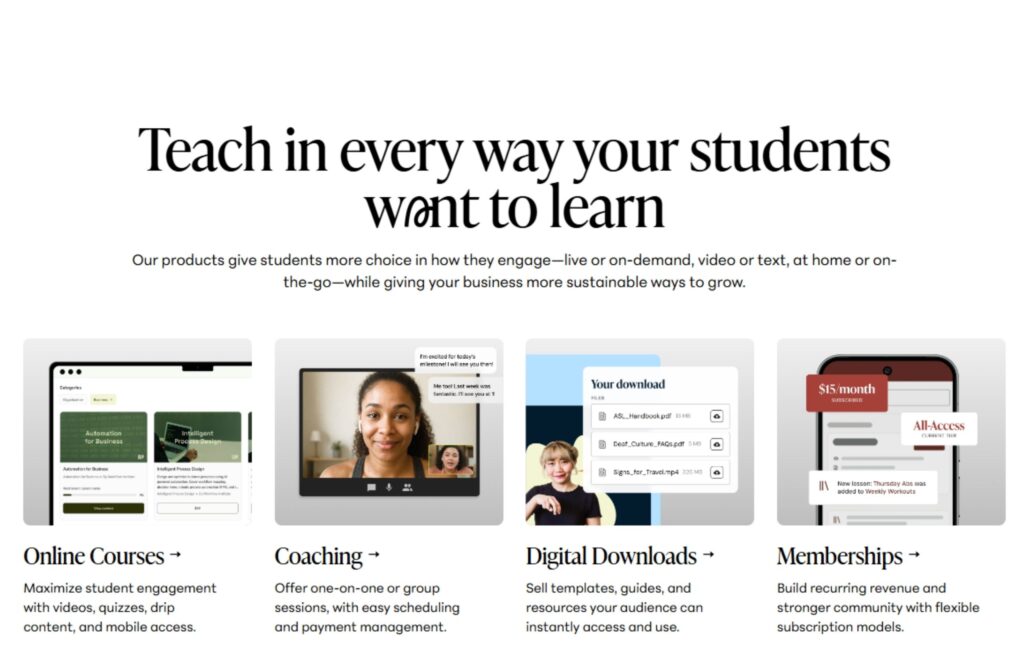
If digital products are courses’ younger sibling, online courses are the premium offering that can transform your blog income.
● Turn blog posts into course material: Your blog content is already teaching your audience; a course just packages that teaching in a structured, comprehensive format. Look at your most popular posts. What questions do they answer? What skills do they teach? That’s your course content.
● Platforms to host courses: Teachable is beginner-friendly with a free plan (10% transaction fee) and paid plans starting at $39/month.
Thinkific offers similar features with a generous free tier.
Podia combines courses, memberships, and digital products in one platform ($39/month). All three handle video hosting, payment processing, and student management.
● Tips for structuring lessons and pricing courses: Break your course into 5-10 modules with 3-5 lessons each. Include video lessons (even just screen recordings with voiceover work great), downloadable resources, and actionable homework.
Price based on transformation, not content volume. A course that helps someone start a profitable blog is worth $199-499. A course teaching a specific skill might be $79-149.
I launched my first course at $97 on Thinkific and sold 30 spots in the first month; that’s $2,910 from content I largely already had from blog posts. Courses take more upfront work than simple digital products, but the payoff is substantially higher.
Thinkific powers courses for creators earning six and seven figures. What I appreciate most? You can start with their free plan and upgrade only when your course revenue justifies it.
🚀 Start your free account and launch your first course this month on Thinkific.
Read more: Thinkific vs Teachable: Which Platform Actually Helps You Launch Your First Course Faster in 2025?
3. Affiliate Marketing
This is how most bloggers make their first significant income, and it remains one of the highest-earning methods even as you scale.
How affiliate marketing works for bloggers: You recommend products or services you actually use, include your unique affiliate link, and earn a commission (typically 5-50%) when someone purchases through your link. The company handles fulfillment, customer service, and product development; you just make the introduction.
Finding affiliate programs in your niche: Start with products you already use and love. Check if they have affiliate programs (Google “[product name] + affiliate program”).
Join affiliate networks like ShareASale, Impact, or CJ Affiliate to access thousands of brands. If you’re in the blogging/tech space, Bluehost pays $65+ per signup, Hostinger pays $60+, and many software tools pay 20-40% recurring commissions.
Write authentic product reviews that convert: The best affiliate content solves a problem first, recommends a solution second. Write comprehensive guides like “How to [achieve goal]” and naturally mention the tools that help. Create comparison posts for people already considering purchases. Be honest about pros and cons; readers trust authenticity more than hype.
I earn 60% of my blog income through affiliate marketing by promoting tools I genuinely use: hosting (Hostinger and Bluehost), SEO tools (RankIQ and Ubersuggest), design tools (Canva Pro), and email marketing (ConvertKit).
The key is only promoting things you’d recommend, even without the commission.
4. Offer Freelance or Consulting Services

Your blog is the perfect portfolio and lead generation machine for service-based income.
Turn your blogging skills into service income: As you blog, you develop valuable skills: writing, SEO, content strategy, social media marketing, and graphic design. People will pay for these skills. Many bloggers earn $500-2,000+ per client offering content writing, SEO audits, blog coaching, or strategy consulting.
Set up service pages and pricing: Create a “Work With Me” or “Services” page detailing what you offer, who it’s for, and what results clients can expect. Price based on value, not hours. A blog audit that identifies $10,000 in potential improvements is worth $500-1,000. Content writing that drives traffic and sales is worth $200-500 per post.
How to attract clients through your blog content: Every helpful blog post demonstrates your expertise and builds trust. Add calls-to-action in relevant posts: “Need help implementing this? Here’s how I can help.” Case studies showing your own results are incredibly powerful client magnets.
I never intended to offer services, but after consistently publishing SEO and blogging content, people started emailing asking for help. I now take 2-3 consulting clients per month at $1,500 each, and my blog content does all the selling for me.
5. Launch a Paid Membership or Community
Membership income is the holy grail, recurring monthly revenue that compounds over time.
How memberships create recurring revenue: Instead of selling one-time products, memberships charge monthly ($9-99/month) or annually for ongoing access to exclusive content, community, resources, or coaching. Once someone joins, they often stay for months or years.
Ten members at $29/month is $290 monthly recurring revenue that grows as you add members.
Tools to build communities: Circle is designed specifically for paid communities and courses ($39-99/month).
Patreon works great for content creators, offering tiered membership levels (they take 5-12% of revenue). Discord can be monetized through paid roles for exclusive channels (you’d handle payments separately). Even a simple private Facebook group paired with a payment platform can work.
Ideas for exclusive member content:
- Weekly Q&A calls
- exclusive tutorials
- templates and resources
- behind-the-scenes content
- accountability check-ins
- networking opportunities
- or early access to your content.
The key is providing ongoing value that justifies the recurring payment.
Memberships take time to build, but create incredible stability. Even 50 members at $25/month is $1,250 in predictable monthly income.
6. Sell Physical or Print-on-Demand Products
Physical products might sound intimidating, but print-on-demand eliminates inventory and fulfillment headaches.
Product ideas for bloggers: Custom journals, planners, or notebooks relevant to your niche. T-shirts, mugs, or tote bags with your brand or motivational quotes. Posters or art prints if you’re in a visual niche.
The beauty of print-on-demand is that you don’t buy inventory; products are printed and shipped only when someone orders.
Best platforms to use: Printful integrates with your blog through Shopify, WooCommerce, or even standalone stores. They handle printing, shipping, and customer service (you just upload designs and set prices).
Etsy works great for reaching buyers already shopping for handmade or custom items.
Redbubble and Teespring are even simpler but give you less control over branding and margins.
How to link your store to your blog: Add a “Shop” page to your blog navigation. Mention products naturally in relevant posts. Feature new products in email newsletters. Show products in use on social media and link back to your store.
Print-on-demand won’t make you rich quickly, but it’s passive income that can generate $200-1,000+/month once established, with virtually no ongoing work.
If you’re thinking bigger than digital downloads—like building an actual product business around your blog’s niche, Shopify is where serious creators go.
👉 Try Shopify free for three days, then just $1/month for your first three months.
7. Sponsored Content and Partnerships
Once you have consistent traffic and engagement, brands will pay you to create content featuring their products.
How to pitch brands for collaborations: You don’t need 100,000 followers to land sponsored posts. Many brands actively seek bloggers with 5,000-25,000 monthly pageviews and engaged audiences.
Create a simple media kit (one page with your traffic stats, audience demographics, and engagement metrics). Research brands that align with your niche and send personalized pitches explaining why your audience would love their product.
Setting your rates and creating value packages: A basic guideline: charge $100-300 for blogs with 5,000-15,000 monthly pageviews, $300-800 for 15,000-50,000 pageviews, and scale from there. Offer packages including a dedicated blog post, social media promotion, email newsletter feature, and ongoing evergreen visibility on your site.
Balancing authenticity with paid content: Only partner with brands you’d genuinely recommend to a friend. Disclose sponsored content clearly (it’s legally required and builds trust). Your reputation is worth more than any single sponsorship payment. I’ve turned down $1,000+ offers because the product didn’t align with my audience’s needs.
Sponsored content can generate $500-3,000+ per month once you have established traffic and a track record of creating quality content for partners.
Join 10,000+ Smart Readers
Subscribe to our newsletter to get the best money tips, tools, and tutorials every week free in your inbox.
How to Choose the Best Monetization Strategy for You
With seven options, how do you decide where to start?
● Identify Your Blog’s Niche and Audience Type
Different niches favor different monetization methods. Tech and business blogs do exceptionally well with affiliate marketing and courses. Lifestyle and wellness blogs excel with digital products and memberships. Creative niches can leverage print-on-demand and digital templates.
Consider your audience’s spending patterns and preferences. Are they actively buying tools and services (great for affiliate marketing)? Are they looking for education (courses work well)? Do they want resources and templates (digital products)?
● Match Your Income Streams to Your Skill Set
Start with what you’re naturally good at. Love teaching? Create courses. Enjoy writing? Offer freelance services. Great at design? Sell digital products or templates. Leveraging existing strengths means faster progress and better quality.
● Start Small and Scale Gradually
Don’t try to launch all seven methods simultaneously. Pick one primary method and one secondary method. Master those, start earning, then consider adding a third. I started with affiliate marketing, added digital products six months later, and then added consulting. Each step built on the previous foundation.
Common Mistakes to Avoid When Picking a Monetization Method
Learn from these mistakes I’ve made (and watched countless others make):
- Relying on too many monetization methods at once. Spreading yourself thin means doing everything poorly. Focus beats diversity in the beginning.
- Selling irrelevant or low-quality products. Promoting random affiliate products for high commissions or creating rushed digital products destroys trust. Quality and relevance matter more than short-term earnings.
- Not building trust before promoting offers. Asking for sales before providing value rarely works. Publish helpful free content first, build credibility, then monetize.
- Ignoring analytics and performance tracking. You need to know what’s working. Track which affiliate links get clicked, which products sell, and which services get inquiries. Double down on what works and cut what doesn’t.
Tools and Resources for Monetizing Your Blog
Essential tools for implementing these monetization strategies:
● Affiliate Tools: Amazon Associates (easiest to start), Impact Radius (connects you with major brands), ShareASale (thousands of merchants across niches). Use ThirstyAffiliates to manage and track your affiliate links efficiently.
● Course Platforms: Teachable (user-friendly, great for beginners), Podia (all-in-one courses and memberships), Thinkific (flexible and scalable).
● Digital Product Tools: Gumroad (simple and effective), Payhip (built-in affiliate program), Canva (create professional-looking products with zero design skills).
● Email Marketing: ConvertKit (free up to 1,000 subscribers, excellent automation for selling digital products), MailerLite (generous free plan with landing pages included).
● Analytics & Optimization: Google Analytics (track which posts drive conversions), Hotjar (see how visitors interact with your sales pages and offers).
For hosting your blog, I recommend starting with Hostinger ($2.99/month) or Bluehost ($3.95/month) — both offer reliable WordPress hosting that can handle growing traffic as you scale your monetization efforts.
Key Takeaways and Next Steps
You don’t need ads to make money blogging; you just need a strategy and the willingness to provide real value. Here’s what to remember:
● Focus on one or two monetization methods that fit your strengths and audience. Master those before adding more. Depth beats breadth when you’re starting.
● Build trust first, monetize second. Your reputation and audience relationships are your most valuable assets. Protect them by only promoting and selling things you genuinely believe in.
● Be consistent and patient. Most of these monetization methods take 2-6 months to gain real traction. Affiliate marketing might generate small commissions immediately, but meaningful income builds over time.
● Provide value, and your audience will buy from you. The best marketing is genuinely helping people. When you solve problems and improve lives, monetization becomes natural rather than pushy.
Start today. Pick one method from this guide, take the first step (create that digital product outline, research affiliate programs, set up a services page), and build from there. Your future profitable blog begins with today’s actions.
The bloggers earning $3,000, $10,000, or even $50,000+ per month aren’t cluttering their sites with banner ads. They’re strategically monetizing through methods that serve their audience while generating substantially higher income per visitor. You can do the same.
Which of these monetization methods will you try first? Share your answer in the comments. I’d love to hear your plan!
Continue Reading:
- How to Drive Traffic to a Blog Without Paying for Ads: 15 Proven Strategies That Actually Work
- How to Make Your First $1000 Blogging as a Beginner
- 12 Free Blogging Tools to Grow Your Blog Faster




3 Comments
Yo check out bongdalu6789, heard it was the place to be for the latest sports info. Let me know if it’s worth my time! bongdalu6789
I loved as much as you will receive carried out right here The sketch is tasteful your authored subject matter stylish nonetheless you command get got an edginess over that you wish be delivering the following unwell unquestionably come further formerly again as exactly the same nearly very often inside case you shield this hike
Your blog is a true hidden gem on the internet. Your thoughtful analysis and in-depth commentary set you apart from the crowd. Keep up the excellent work!